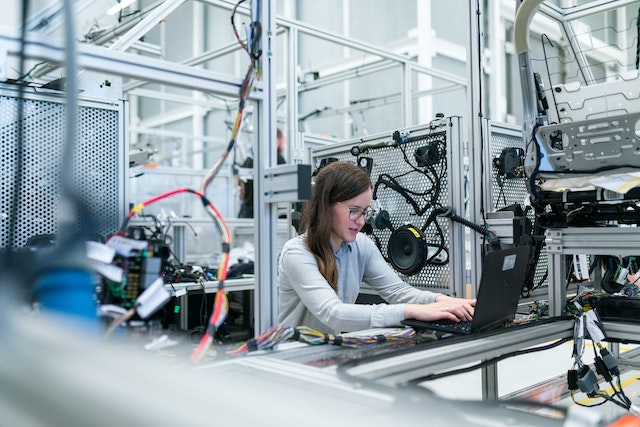
As we celebrate International Women in Engineering Day on 23 June, the burning question is how to find all the missing ones.
While the percentage of women in engineering and technology in the UK has risen by 6% in the past 11 years, it’s still only 16.5% of 5.7 million people. In the overall UK workforce, women make up 48%--meaning engineering and tech are short 1.8 million female workers, in the middle of a desperate talent crisis. How can we solve this?
We need more young female talent entering the sector, so let’s start by looking at percentages in further and higher education. While the percentage of women starting engineering-related apprenticeships has risen to 14.2%, according to Engineering UK, that’s still well behind the average of 50.8% for all apprenticeships.
At university, the proportions are equally concerning, with women making up only 18.5% of first-year undergrads in engineering and technology, versus 56.5% overall. Yet female engineering and technology students are outperforming men, with 48.6% getting first-class honours, compared with 41.9% men. 15 months after graduation, men and women have similar rates of progression into the workplace.
While these stats certainly put paid to any lingering doubts about women’s abilities, they also suggest that only the top women are considered (or consider themselves) good enough to do engineering degrees. We need all those women who are capable of getting second-class degrees to be at university getting them.
A-Level statistics seem to confirm this theory, with 56,000 boys and 37,000 girls taking maths and physics in 2020/21–a much smaller gender gap. However, 23% of those boys went on to engineering and technology degrees–and only 8% of the girls. At that rate, we’d need about 150,000 female A-Level students to achieve gender parity at degree level.
This means we need to improve both uptake of maths and physics A-Levels and progression from A-Level to engineering and tech degrees among female students. This must start early, with 61% of boys aged 11-19 and just 42% of girls saying they thought engineering would be suitable for them as a career.
There are already many organisations working on this, but employers can help by doing outreach in schools, signing The Tomorrow’s Engineers Code, or getting involved with The Big Bang Fair.
The struggle to achieve gender parity in engineering and technology may be old news, but it’s also an urgent priority–and it calls for action now more than ever.